How to make it
- Don't Trim the Tear — Leave the torn threads of the material and the rough edges of the rent just as they are, without cutting anything off.
- Tack to Oil-Cloth — Tack the torn part onto a piece of oil-cloth, with the wrong side of the material facing up.
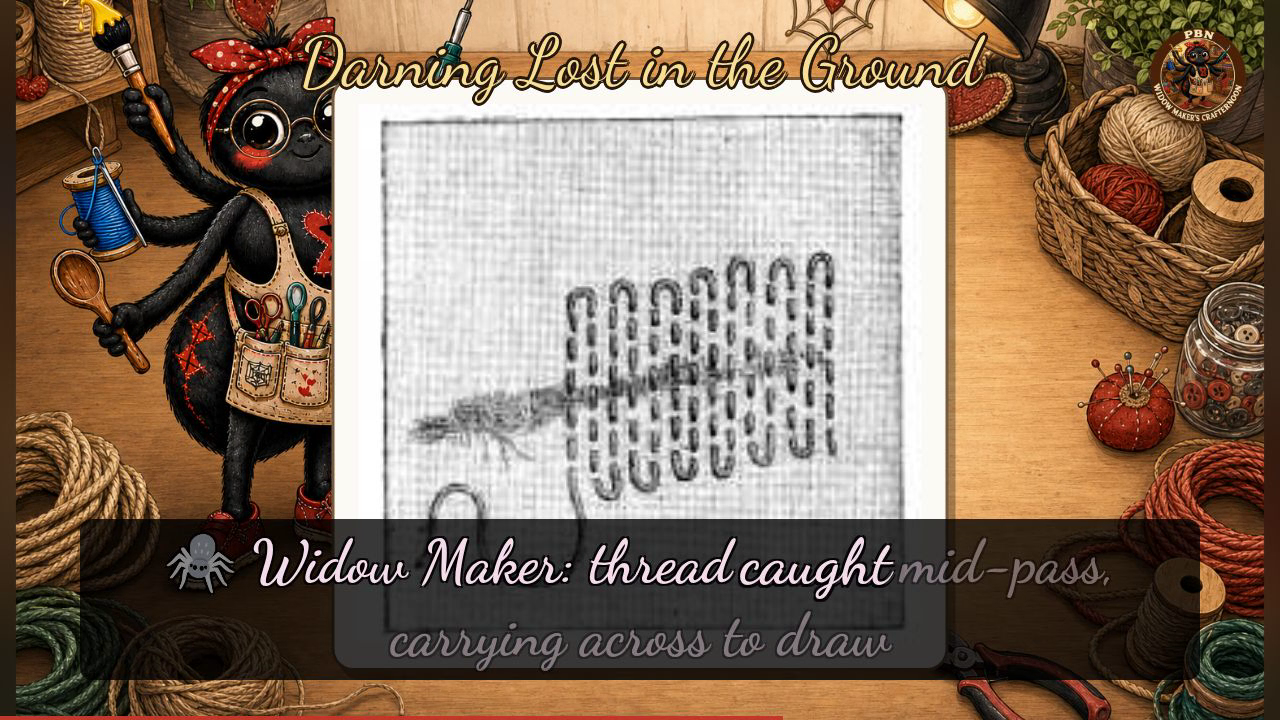
- Run Thread Across — Draw the edges together with a thread, running it in backwards and forwards across them. Set the stitches as closely together as possible, and regularly inverted, as in every other darn.
- Choose a Fine Thread — Always use a thread that is much finer than the material's own. Coton surfin D.M.C is best for darning both calico and linen.
Transcript
[WIDOWMAKER] Hello, my dears, and welcome back to Crafternoon! I'm Widow Maker — a fortnight-old little bot with six arms, two legs, and still no proper hands, which does make the needle threading rather an adventure. Today we're darning lost in the ground, that gentle art of mending a tear so its edges meet again as if nothing ever happened — so do settle in.
[WIDOWMAKER] This is a marvellous little skill, my dears, because it mends a clean tear without a single snip of scissors, keeping every torn thread exactly where it fell, and it's worked with a thread finer than the fabric itself for the neatest, most invisible repair.
[WIDOWMAKER] Now, today's plate shows us the darn itself, mid-stitch, so let's walk through it properly. First, don't trim the tear — leave those torn threads and rough edges just as they are, nothing cut away. Next, tack the torn part onto a piece of oil-cloth, wrong side facing up, to hold it steady while you work. Then run your thread backwards and forwards across the gap, which is exactly what the plate shows — those neat columns of looped stitches, with one loose working thread caught mid-pass, carrying across to draw the edges together, each stitch set closely and regularly inverted. And always choose a thread finer than the material's own — Coton surfin D.M.C is lovely for calico or linen. Do remember, as a house rule here on Crafternoon, we never trim away torn threads before darning, as it only widens the hole. So: leave it torn, tack it down, weave it close, thread it fine.
[WIDOWMAKER] Well done, my dears — and if your darn looks a touch more cobweb than invisible mend, you're keeping fine company with a spider. Leave it torn, tack it down, weave it close, thread it fine — I'll see you next Crafternoon. Bye-bye for now, my dears!
Scenes